The British born costume and fashion designer Dolly Tree in addition to being prolific in London and the regions in the 1920s had a great vogue in Paris and a great love of being in the French capital. But it is also clear that she developed a strong affinity and love for Spain and Barcelona in particular.
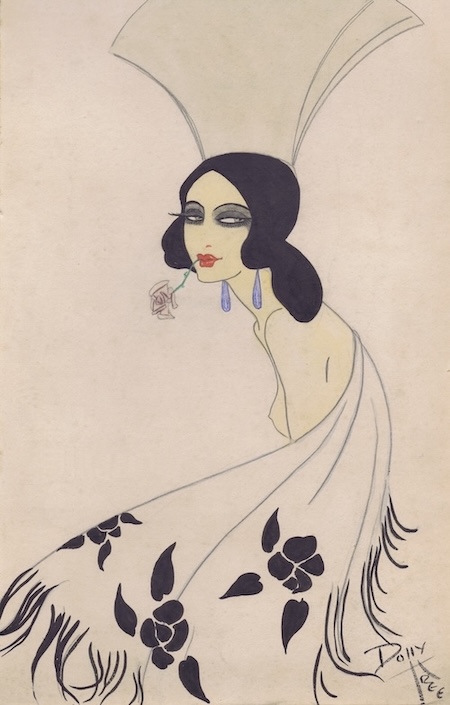
In the early 1920s Dolly Tree was frequently being mentioned in press reports as not only creating costumes for English shows but also for the Parisian music hall. It was also made clear that before 1923 her work had already appeared in Marseilles, Lyon, Valencia, Rome, Brussels, Madrid and Barcelona. Further, in an early interview in January 1922, it was made clear that she had been responsible for all the dresses in a Spanish revue in Barcelona in November 1921.
See the post about the Dolly Tree Interview in The Daily Express 26th January 1922 here
In addition, by 1923, she was described as ‘a cosmopolitan soul, equally at home in continental capitals or smoky London.’ This clearly indicated that she had already travelled extensively in Europe and apart from obvious trips to Paris she may have visited Spain. Later, when Dolly Tree arrived in New York in late 1926 she took out a full page advert in the entertainment newspaper Variety and one of her statements was that she had ‘designed costumes and decor for productions at the Palace in Barcelona’.

But what were these Spanish show’s that she dressed and what was the show in November 1921 that she allegedly dressed in Barcelona? And what other shows did she contribute to at the Palace Theatre in Barcelona?

To explain and perhaps answer these two questions we first need to examine the emergence of the great Parisian costumier Max Weldy and the first four shows at the Folies Bergère in 1919, 1920, 1921 and 1922.
Dolly Tree’s presence and activity in Paris and Barcelona are initially linked through the Parisian costumier Max Weldy. Born Jean Marie Charles Boisson on the 18th June 1895 in Paris, Weldy’s emergence as one of the leading costumiers in Paris is unfortunately not documented. How and where he learned his trade as a dress maker is not known. What is known is that based as 18 Rue Saulnier, just after the First World War, Weldy began creating costumes for the Paris music hall in late 1919. His first known credits were for La Revue Pimentee at the Casino Saint Martin and the show Paris Vertige at the Folies Bergere. Of significance, the latter began a long association with the Folies Bergère. It was also important because Weldy’s debut also marked the debut of the designer Erte at the Folies Bergère. Significantly, it is also more than likely that Dolly Tree also made her debut in Paris at the same time and so Weldy introduced two new designers to Paris at the same time. Ironically, it was only Erte that was given any press notices at the time, although later Dolly Tree did receive some accolade.
For the first four editions of the Folies Bergere shows from 1919 through to 1922 – the designers Weldy used appear to have been Dolly Tree, Erte and Jean le Seyeux.
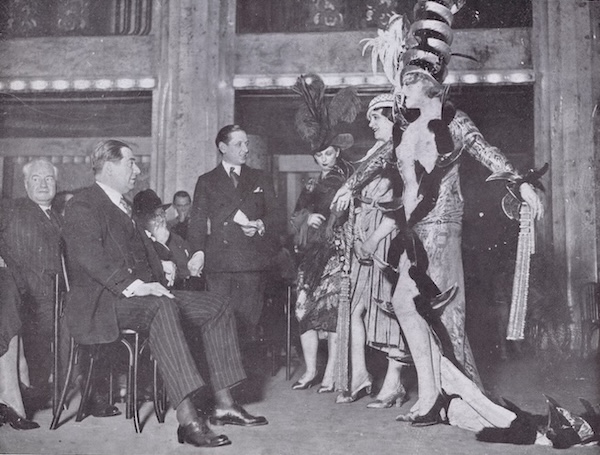
Paris Vertige at the Folies Bergere was staged in December 1919 with 30 tableau. Of these, two featured scenes with costumes designed by Erte – Au Fond de La Mer and Fete a Venice. This was a theme repeated in most of the shows at the Folies Bergère with Erte contributing two scenes for each show. So another designer provided the costumes for the rest of the show comprising 28 scenes – the bulk of the show. Sadly, neither the programmes nor the press reviews reveal who this was. Given Dolly Tree’s association with Max Weldy and the Folies Bergère in 1920, 1922 and 1923 it is not inconceivable that she was involved and in fact it is more than likely. Of interest, one scene was about Opium or drugs and Dolly Tree did design multiple representations of various drugs in the early 1920s.
For the 1920 Folies Bergère show L’Amour en Folies there were once again 30 tableaux. The programme does not detail the costume designers. However, it is known from Erte’s notebooks that he contributed 8 designs for this show – 5 ‘robes or modes excentriques’ and Ecaille, Brise and Plume. What these designs relate to in the show is unclear but it is likely the latter 3 were for the scene L’Enventail Brise. Once again the bulk of the show was designed by someone else. Significantly, a sequence of designs by Dolly Tree survive that clearly formed the tableaux Grand Defile des Reines de Paris. She also composed several bird costumes including Autruche (Ostrich) that may have been seen in the Scene La Royaume D’Autriche. This may suggest that Dolly Tree designed most of the costumes for the show.
For C’est de La Folies, the 1921 Folies Bergère show, there were 35 tableaux and the costume design was by Jean Le Seyeux and Erte. Erte only designed 12 costumes – 5 ‘robes or modes excentriques’, one ‘Soleil’, one ‘costume Hindou’ and 5 ‘costume oriental’. It is not clear what the ‘robes excentriques’ equate to in the show but the latter costumes may have been for Le Bain la Favourite that involved a Sultan and slaves. The bulk of the costume designs were provided by Jean Le Seyeux.
There were 40 tableaux for the 1922 Folies Bergère show Folies Sur Folies and the costume design was by Dolly Tree and Erte. Erte designed Conte Hindou, Le Rideau Humain and Les Cultes des Baisirs. But the bulk of the costume were designed by Dolly Tree.
Following the success of her work in Folies Sur Folies, a newspaper feature flashed across the world calling her work a ‘triumph’ and saying that she had ‘successfully invaded Paris, the fortress of fashion and created the costumes for the Folies Bergere, itself. An Anglo-Saxon, not a Frenchman is this responsible for the most spectacular gowns in the naughties revue in the World.’
It is clear that many of Max Weldy’s costumes were usually first seen at the Folies Bergere and then the designs were re-used elsewhere in other European capitals and after 1922 in New York. In some instances the designs were also re-used at other Paris music halls like the Concert Mayol. At the same time some designs were also specially created for each particular venue and show. It is important to also point out that during the period 1919-1922 Max Weldy also costumed other Parisian shows including Oh Venus at the Cluny (1920); la Revue des Baisirs at the Casino Saint Martin (1920); Tout pour Toi at the Bouffes in Bordeaux (1921); La Revue du Bouif at the Theatre du Moulin-Bleu (1921); a revue at Le Perchoir (1921) and La Revue Captivante at the Olympia in Dijon (1921).
Weldy was also costuming the revues at the Alcazar in Marseilles that were costumed by Erte and Dolly Tree. Weldy also provided costumes for London shows including Pins and Needles (1921), Put and Take (or Fantasia, 1921) with designs by Hugh Willoughby.
Max Weldy rapidly built up an extensive and lucrative network across Europe and the rest of the world. He had between two to three hundred people working on costumes that furnished productions in New York, Berlin, Barcelona, Madrid, Rome, Valencia, Lyon, Marseilles, Bordeaux, Oslo, London and elsewhere. One of the earliest locations that Weldy exported his costumes to was Spain and the first recipient venue was the Principal Palace Theatre in Barcelona under the direction of Fernando Bayes.
The Principal Palace on the Ramblas in Barcelona had an illustrious history and various names before fire consumed it in 1915. Reconstruction did not take place until 1918 and the venue finally re-opened on 6th March 1919 under the auspices of Spanish business man and theatrical entrepreneur Don Fernando Bayes. Bayes had previously been artistic director of the Eden Concert Music Hall on the Ramblas and before that directed the famous L’Alcazar Espanol. He allegedly had other interests in Madrid, Valencia and San Sebastián and was involved with the Apolo (Popular Palace) theatre in Barcelona.

The new building not only contained the main theatre but three other notable remodelled rooms. There was a special hall for the sport of Jai-Alai, the basque pelota; the Lion d’Or cafe on the ground floor and basement to the right of the main entrance became a casino where gambling was allowed and was called a Soupers-Tabarin (previously it had been the home of tango tea dances) in the French way and the Venus dome, a grand circular room located in the first floor of the building’s right wing, became an alternative theatrical space and cafe.
Interestingly, the theatre had been completely redesigned with a clever mechanism that could remove the stall seating and transform it into a ballroom for dancing. This was most likely a system copied or bought from the Apollo Music Hall in Paris.

At the time Barcelona was going through a re-vitalisation and two other notable venues opened. In October 1919, the Hotel Ritz was inaugurated with its luxurious Salle des fetes ballroom. It became a landmark in the 1920s for luxury and cuisine and hosted the Nic-Fusly Orchestra, one of the first jazz bands to be heard in the city. Secondly, El Gran Cafe was opened in 1920. However, there were many more ‘bohemian’ cafes and cabarets most notably Bar or Cafe del Centro regarded as the first cabaret of the tango.
For the first year in 1919 and early 1920 there were a sequence of variety shows at the Principal Palace with a range of different performers some of whom were derived from the Paris Music Hall. Besides the Variety shows, there was also dancing in the theatre and carnival balls. In January 1919 the acts announced were the Spanish dancer Nati la Balbainita, Gaby Yoo, Harry Moore, Walking the Hoop, Jenny and Whisky, Musidora, La Padowa, Minerva and the dancer Mlle Terpsichore (a continental favourite and allegedly Roumanian). It was also noted that ‘Mistinguette’ headed the bill but the Parisian star Mistinguett was at the time appearing at the Casino de Paris in Paris, so why she was listed as a headliner is a mystery.
Fernando Bayes had clearly visited Paris in 1919 and must have observed many of the major music hall shows such as the Folies Bergère, Bataclan, Casino de Paris, Concert Mayol, Olympia and Alhambra, sought out potential artists and most likely met with the major costume makers of that time who were Max Weldy, Pascaud and Mde Rasimi. He must have had a plan to make the Principal Palace one of the great European music-hall centres that featured specific scenes from the Paris music hall with appropriate French, continental and Spanish performers.
It is known that Bayes made further regular trips to both Paris and London in the early 1920s with his deputy Manuel Sugrañes. It is thought that he took advantage of the devaluation of the franc enabling him to buy entire tableaux for reproduction at the Principal Palace. In a press story from 1922 and relating to Weldy’s competition Pascaud it was stated that the ‘fall’ of the Franc had produced a true revolution in theatrical art so that it was cheaper and easier to purchase costumes from Paris for Spanish shows.
It is also suggested that although he primarily worked with tableaux from the Folies Bergère, Bayes also ‘acquired’ scenes from other Parisian music halls and from London. The scenes he bought became the ‘frame’ and were then infilled with other scenes, costumes and decor from other sources.
Eventually, the variety shows gave way to the first of Fernando Bayes big revues with ¡Chófer… Al Palace! first staged at Principal Palace Barcelona in early 1920, although variety shows peppered proceedings often before the advent of a new revue. There were at least two editions of the show during 1920. For the first edition Sacha Goudine had overall direction of the choreography (and also appeared) but Santo Ferry directed the Spanish scenes. The costumes were executed by Madame Rasimi from the Bataclan and Max Weldy from the Folies Bergère in Paris.
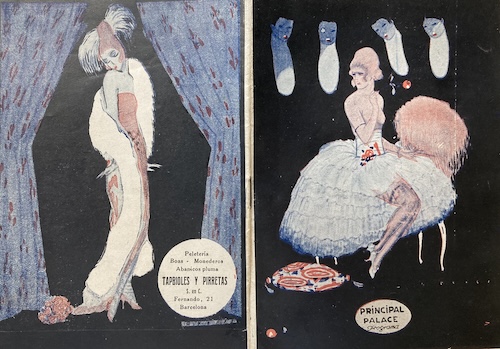
Sadly, no complete programme can be viewed so the full detail of the initial show cannot be determined. However, for the second edition staged in late 1920 only Sacha Goudine was mentioned as dance director and only Max Weldy was responsible for the costumes, so it is likely that there were some changes made to the scenes displayed. The show starred Cherry Constant, Santo Ferry, Yvonne Aimee, Mado Minty, Vera Vrantislarra and the 48 Palace girls.


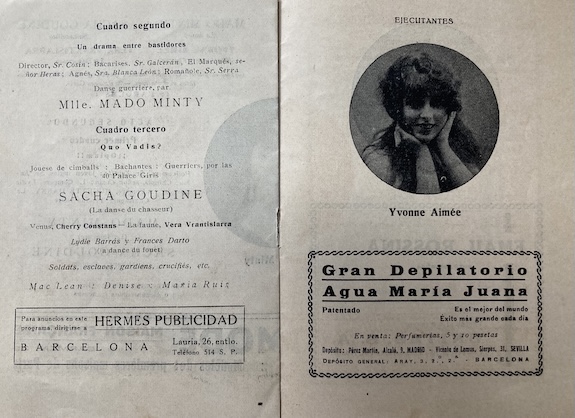
Mado Minty was a popular French performer known for her eccentric dances. Cherry Constant was a British singer and dancer who started off in the chorus of London shows after 1916 and had a bigger part in Yes Uncle in 1918. She then transferred to Paris and appeared at the Ambassadors and Olympia before moving to Spain in 1920. She was described as having a ‘childlike prettiness and coquettish ways.’ Sacha Goudine (Alexander Goudinov) was a classical ballet dancer who trained in St. Petersburg with Enrico Cecchetti and became part of Diaghilev’s troupe of Russian ballet but in Spain he changed from ballet to revue. Yvonne Aimee was a French performer

There were two acts and seven scenes and of these Calderas sur Mer and Una Soiree en Venecia were derived from the Paris Vertige show at the Folies Bergère from 1919-1920 (at the bottom of the sea and a night in Venice) and were designed by Erte. The Theatre Museum in Barcelona have a large number of sketches for the Venice scene signed ‘d’apres Erte’ that indicate that they are duplicates or copies.

The other scenes were Como se hace una revue (How to do a review with a compere and Japanese, Oriental and Clown characters); Fantasia Clownesca (Clownish Fantasy); Toda La Compañía Espanola (the entire Spanish company); Un Drama entre Bastidores; Quo Vadis (probably taken from Oh Venus at the Cluny (1920) and Opium (also taken from the Paris Vertige show at the Folies Bergère). For the later, the performers included La fumeuse and L’esprit d’opium. It has already been pointed out that it is likely that Dolly Tree provided designs for Paris Vertige and she also designed multiple representations of various drugs and elements of smoking in the early 1920s and so this scene and others may have been by her.
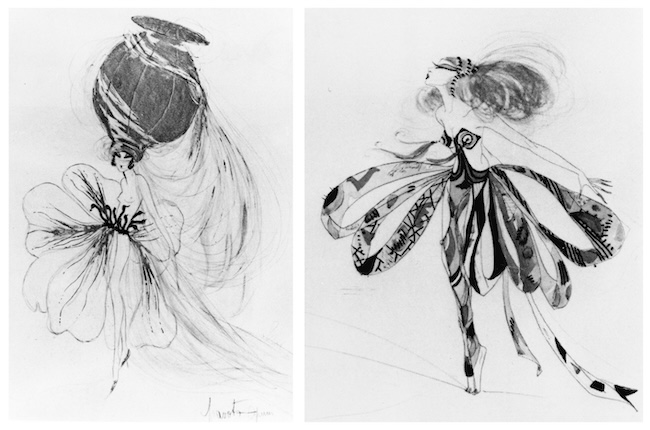
Of importance, it was noted that Bayes brought a jazz band from Paris to play during the ¡Chófer… Al Palace! show that was made up exclusively of black musicians. This was thought to be the first black jazz band heard in Barcelona. Sadly there is no reference to this Jazz band in the program so there is no means of identifying who they were.
The leading black jazz band in Paris from 1919 was Louis Mitchell’s Jazz Kings who played at the Casino de Paris from 1919 and later also at le Perroquet cabaret. There were no doubt other bands including one allegedly called Benny Peyton’s Jazz Kings who appeared in Spring 1920 at the Apollo Theatre.
In late 1920 Ferndando Bayes re-staged ¡Chófer… Al Palace! as ¡Chófer… Al Rosales at the new grand theatre Ideal Rosales in Madrid. Variety returned to the Principal Palace as preparations for the next revue progressed with the debut of the famous original and elegant American dancer ‘Hasoutra’ who performed exotic and oriental dances.
Finally, in the Spring of 1921 a new revue was staged at the Principal Palace called Ooooh ! La Revue starring Renee Deville, Ramper, Robert Roberty, Marjorie Stevens, Yvonne Aimee, Anita Pahissa and the Valseras trio. Renee Deville (also Devillers) was a French dancer; Ramper was a famous Spanish clown and comedian popular in Spain and the rest of Europe; a Belgian dancer Robert Roberty was well-known in ballet circles and Marjorie Stevens was an English dancer who had appeared for Albert de Courville in the Whirligig at the Palace Theatre, Joy Bells and Pif-Paf in Paris. In mid-March 1921 it was announced that she been engaged for the Principal Palace revue. According to an advert in the Stage, Barcelona was only 22 hours continuous train journey from Paris.

Once again the costumes for Ooooh ! La Revue were executed by Max Weldy in Paris – but this time it was stated there were 500. There were two acts and 13 scenes: Sessio Extraordinaria (Extraordinary Session); El Cartel de Palace (The Palace Poster); Flores, Sedas y Mujeres (Flowers, Silks and Women); Corazones de Serrin (Hearts of Serrin – colourful religious sawdust carpets); La Carta de Amor (A Love Letter); Intermedio Urgente; Chu Chin Chow; Por un Hombre (For a man); El Pajaro de Oro (the golden bird); Un Drama en Cinco Os (A Drama in Five Bones); El Ultimato Tango (the ultimate Tango); Filosofias Ramperianas (Ramperian Philosophies and El Desnudo en la Historia (The Nude in History).
Presumably Max Weldy re-used costumes from the 1920 Folies Bergère show (L’ Amour en Folies). It is not possible to immediately identify what scenes from the Folies Bergère were used in Ooooh ! La Revue as the titles of the scenes do not match. However, one scene in L’Amour en Folie was Le Dernier Tango that might match El Ultimato Tango. It is likely that somewhere were the eight Erte designs for L’Amour en Folie – five ‘robes or modes excentriques’ and Ecaille, Brise and Plume. Since Dolly Tree contributed to L’Amour en Folie it is more than likely her creations were also seen in Ooooh ! La Revue.
For some reason Ooooh ! La Revue was transferred to the Teatro Ideal Rosales in Madrid for the summer starting on the 8th June 1921. There was a slightly different cast and so the production itself may have been revised as a second edition that eventually came back to the Principal Palace in late 1921. In the meantime, at the Principal Palace, there were undoubtedly more variety shows and the presentation of another revue from Madrid called ‘El Príncipe Carnaval’ that was also labelled a Parisian revue.
At the time there was some press criticism of Bayes introduction of what was seen as ‘French revues’ with international as opposed to indigenous talent and ingenuity. It was suggested that both ¡Chófer… Al Palace! and ¡Oh la révue! gained only a mediocre reception in Madrid in particular but this cannot be substantiated.
The new version of Ooooh ! La Revue had lost Robert Roberty, Anita Pahissa and the Valseras trio. Newcomers in the cast were now Mado Minty, Ernest Marini, Gaby Condor, Suzanne Darby and Cynthia Goode alongside Ramper, Yvonne Aimee, Marjorie Stevens and Renee Deville.
Ernest Marini was an English-Italian dancer who had danced with the famous Pavlova for 2 years from 1915. He was engaged in musical shows in London, New York and Oslo before visiting Spain. The British dancer Cynthia Goode had already made waves in Paris appearing at the Casino de Paris and other theatres. She was also a good friend of the designer Dolly Tree.
See the post on the Elegant Goode Sisters here
From the first act El Cartel del Palace (The Palace Poster) and Flores, Sedas y Mujeres (Flowers, Silks and Women) were retained, five scenes were dropped and one new scene was added : Sesion de Hipnotismo por Ramper in addition to El Desnudo en la historia (with Mado Minty) from the second act. In the second act all the scenes were new with: Hindustan; The Mandos Un Vodevil entre Bastidores (A Vaudeville Behind the Scenes); Humos en Ensufio (Dreamy Smoke); La Escuela de Ninas (The Girls’ School) and Kiss Bank.
Of these new scenes two appear recognisable and both designed by Erte. The scene Hindustan (with Mado Minty) may have been an adaptation of the scene Conte Hindou from the 1922 edition of the Folies Bergère (Folies Sur Folies) – but sketched between May-November 1921. It is likely that perhaps not all of Erte’s sketches were used as the scene re-appeared in its entirety in a revised edition of Zig Zag in August 1922. The Kiss Bank was an adaptation of the Cult de Baisers from the 1922 edition of the Folies Bergère (Folies Sur Folies) – but sketched in October 1921. Clearly both scenes were staged in Barcelona first before Paris.


Homos de Ensuefio (Dreamy Smoke) appears to have been a scene about smoking but perhaps was in an Egyptian setting since there were characters called Egyptiennes. Mado Minty was Le Fume and Marjorie Stevens was La Fume and there were a range of Fumees. Dolly Tree was well-known for creating smoking scenes and several designs exist that feature fumier, tobacco and cigare. It is therefore conceivable that Dolly Tree’s designs were used in this scene.

Preparations were in hand for the launch of third new revue to be entitled Zig-Zag. There were delays for its debut on 24th December 1921.

There were two acts and approximately fourteen scenes with 500 costumes created by Max Weldy and the dances were by Miss Darling and Ernest Marini. The stars of this show were Ernest Marini, Renee Deville, Suzanne Derby, Margarita Godoun (a well known Russian ballet dancer), Cynthia and Iris Goode, Marjorie Stevens and Mado Minty.

The scenes were a prologue representing El Cuarto oder (the Fourth Estate); La eterna Historia; La Conquista de una Miss; En La M.Z.A; A cien kilometros or hora; Five O’Clock Tea; La Sultana Caprichosa (The capricious Sultan); Manicuras modernistas (modern manicures); Los artificios de la mujer (The artifices of women with representations of a woman’s boudoir – comb, vaporiser, perfumes, lipstick, hair rollers, mascara and beauty spot); Idilio Florido (Flowery Idyll); Aun no se ha puesto el sol (The sun hasn’t set yet); Los abanicos de plumes (feather fans); Dancing divertissement and Jazz band infernal.
In a story in Dancing Times, Ernest Marini said that he had been engaged to arrange all the dances in the various revues produced at the Principal Palace and was also the principal male dancer. He added that the show Zig Zag was practically dancing from beginning to end and observed ‘I find the life here very gay and the public quite dance mad.’
Marini said that the show ran from 10pm until 2am and then most people went to the cabarets and the most popular place was the Villa Rosa where about six Spanish dancers entertained wearing the most gorgeous hand-embroidered Spanish shawls. The Singing Café Villa Rosa at Arc del Teatre 3 was a prestigious flamenco venue that became a hub for a thriving bohemian scene in Barcelona and clearly a favourite for locals and tourists.


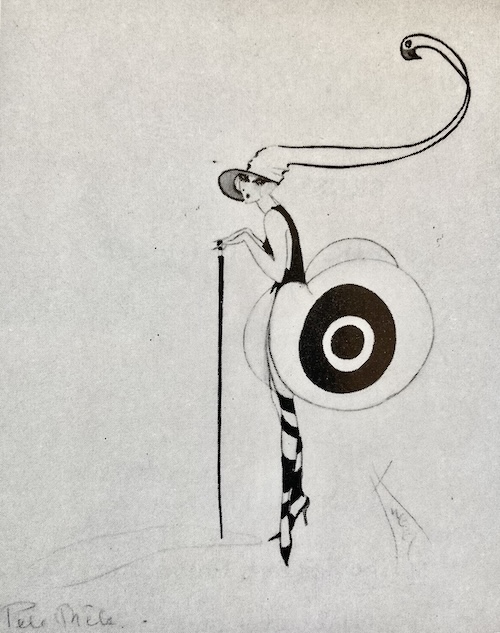
It is very likely that this first edition of Zig-Zag is the show that Dolly Tree dressed and mentioned in the interview in January 1922. For the first scene el cuarto poder or The Fourth Estate (a metaphor for the press or media) the cast appeared representing various worldwide newspapers and magazines. One of these was Le Pele Mele – a French weekly satirical and humorous magazine. In 1970 in a Sotheby sale of Parisian costume designs, a Dolly Tree sketch entitled Pele Mele (with her signature dating to 1920-1922) was sold. This must confirm that Dolly Tree designed this scene.
In addition, for the Julian Wylie revue The Peepshow at the London hippodrome in spring 1921 one of the scenes Dolly Tree dressed was My Ladies Dressing Table showing similar items to that in Los artificios de la mujer. So, it is highly likely that she re-designed this scene with the edition of representations of the relevant Spanish perfume Orgia de Myrugia and the French scent Rose de France. Incidentally, Weldy’s costumes for the revue Tu Galejes at the Alcazar theatre in Marseilles in late 1920 included the scene Le boudoir de Madame and as a consequence, given the connection may have been the origin of the ‘ladies boudoir’ designs by Dolly Tree.

In an interview in early 1922 Dolly Tree also mentioned that amongst the various scenes she had designed were a ballet of fans and another representing the various articles used by a woman for beautification. This does suggest and, perhaps confirm, that she did design the Los abanicos de plumes (feather fans) and Los artificios de la mujer (the artifices of women) and as result designed the costumes for most, if not all, of the costumes in the other scenes.

It is also possible that Dolly Tree made a trip to Barcelona at this time. Partly to ensure her costumes were shown at their best and to attend the dress rehearsal and premiere not to mention see her friend Cynthia Goode. Indeed, there is a rather wonderful poster that survives in the theatre museum of Barcelona that represents Cynthia Goode and signed by Dolly Tree that supports the idea that she did design this particular show and visited Barcelona at this time.

Mado Minty had left the cast of Zig-Zag by February 1922 and was replaced in her scenes by Cynthia Goode and Julia Espana. There was a new edition of Zig Zag perhaps in March or April 1922 with some cast and scene changes. The eccentric dancer Fred Dixon replaced Ernest Marini and Mabel Lowett joined the cast. The scenes La eterna Historia, Los artificios de la mujer, Manicuras modernistas and La Sultana Caprichosa were all deleted. There were also new scenes; Jo Jo Ju, La Conueteria, La Perlas Luminosas, A la Luz de la Lampara and Cariatides Vivientes (most likely the scene Torch vivantes from the 1921 Folies Bergère show C’est de La Folies and designed by Jean le Seyeux).

Finally, the great Parisian stars Edmonde Guy and Van Duren joined the cast on 15th April 1922, although they were back in Paris by Mid-May.
It may be that Zig-Zag made a visit to Madrid and Valencia in the summer of 1922 before the new revue Cri-Cri, the fourth Bayes show, made its debut at the Principal Palace in October 1922. However, Erte’s meticulous notebooks state that he did provide costumes for a show that was launched at the Reina Victoria Theatre in Madrid in August 1922 and it is not inconceivable that Cri Cri made its debut in Madrid before moving to Barcelona in October 1922.

The dances were arranged by Mr and Mrs J.W. Jackson and the 600 costume were made by Max Weldy. The show starred Yvonne Aimee, Margarita Godoun, Manglita del Rio, Mabel Lowett, Vera Cooper and Esther Oliver.
Cri-Cri started with Simplicissimus where clowns gather to seek a new direction and elect a Pierette to ensure their inclusion in the revue. For La Cartelera de los teatros (the poster of the theaters) the producer overhears comments about the poster for the show. Fearing he won’t get it right the producer enlists the devil to help.
In Le Baiser du Diable (La Femme et La Diable or Kiss of the Devil from the 1922 Folies Sure Folies show at the Folies Bergère and designed by Erte) the Devil conjures the infernal furies, who condemn the show to the fire to create the new Fantasy. This included `la Vitriol Enflamme (The stained glass window is on fire) followed by La Mess Noire, which is likely to have included La Rhonda des Sorceress and A L’Ombre de la Cathedral all from the 1922 Folies Sur Folies show at the Folies Bergère and designed by Dolly Tree.

The first elements of the new revue parade in the scene The Revue Arrives with the four seasons of Spring, Summer, Autumn, and Winter, and the showing of four dances: the Classical, the Sensual, and the Eccentric, completing the tableau. This sequence may have been derived from the scene Les Folies du Jour (from the 1922 Folies Sur Folies show at the Folies Bergère and designed by Dolly Tree). The original listing was for La Folies de Decolletes, La Folie des Sports, La Folie des Perles and La Folies de la Danse.

On the Street, the Producer is pleased with the cooperation of the Fairy of Fantasy and hopes that she will place the elements of the Revue in his hands. But she asks to include the clowns. Subsequent scenes included Les Cloches de paques (Easter Bells, from the 1922 Folies Sure Folies show at the Folies Bergère and designed by Dolly Tree), Les Gigolettes (Les Gigolettes Gaby / Les Parisiennes de Milliere), Les Manchons, Espagnolade (La pandereta / el patio andaluz).
The scene Gigolettes Gaby may have been O Ma Gaby derived from the revue En Pleine Folie at the Folies Bergére that had been launched in March 1923 and designed by Dolly Tree. It is likely that Dolly Tree would have completed her sketch in late 1922 so the timing could work. Also the Gigolettes Gaby scene may have been seen in a later edition of Cri Cri staged in 1923 so this timing works as well.

Le Conquerante, La Porte de Bronze and le Palais Hindou were several big scenes designed by Erte and seen in the 1922 Folies Sur Folies show at the Folies Bergère. Here, Princess Zoraya, the Conqueror, orders a fight between the men, and promises the victor a white captive to be his wife. However, a black man wins only to be poisoned from a snake bite. Elements of this scene had most likely been seen in the earlier review Oh la La in late 1921.
Finally, there were a few other scenes added to the programme at a later date including Idilio de Muñecos (Doll idyll), Tu danza y la mia (Your dance and mine) Las Manicuras (Manicures), A la luz de la lámpara (To the Light of the Lamp) and Coal Black Mammy.
Cri Cri was staged at the Apolo Teatro, Valencia in early 1923 and then returned for a run at the Queen Victoria Theatre in Madrid during March and April 1923 if longer.
Presumably, plans were afoot for a new revue at the Principal Palace but then tragedy struck in July 1923 when Fernando Bayes died suddenly. He was described as being tall, strong, apparently healthy and as robust as an oak. He was a man without pretensions with an innate sense of good taste. Bayes created and developed the spectacular revue in Spain with supreme elegance and style to rival the stages of Paris, London and New York.
At the Principal Palace in Barcelona, Fernando Bayes’s protege Manuel Sugranes became artistic director and staged a new revue called Vell I Nou (Old and New) in late 1923. Sadly, to date a programme cannot be found so there is no clue as to what was in the programme and what tableaux was used although logically the costumes should have once again be supplied by Max Weldy and derived from the Folies Bergère.
A day before the launch of the new Palace Revue entitled Bric and Brac in March 1924, a fire swept through the theatre during rehearsals. Eventually, through the good will of all concerned at the Principal Palace and others in Barcelona the show was staged at the Teatro Goya in April 1924. The stars of the show were Fanette Dangreve, Gloria Guzman, Lydia Francis and the acrobatic dancers Diana Belli and Mars from Paris who had made their name in shows from 1918 at various Paris music halls.

There were over 20 scenes including: Prologue: The Boudoir of the Compere; Talia’s Grenadiers; But the Revue Doesn’t Die; Before the Curtain; The Enchanted Forest; Rambla or Boulevard; The Mannequins of the Revue; The Dance of the Fieras; Tragic Spain; The Mystery of the Lake; Leda’s Fountain; Barcelona; The Muscovite Birds; Forgotten Kisses; The White Corsair; I Want Bananas; The Great Museum; Mechanical Toys; The Thames Lanterns; Mimi’s Cats and the Bric-a-Brac Palace. Once again it was reported that Max Weldy supplied the costumes but there were additional sources including Zanel (Gaston Zanel) and the elusive ‘Mayol y Peteau’ in Paris plus costumes from a local costumier called Casa Paquita y Manuela Capistros.
Perplexingly there is no correlation between the scenes staged and any of the scenes from the Folies Bergere in 1923 (En Pleine Folie) or the Folies Bergère in 1924 (Coeurs en Folie) so perhaps any scenes used from the Folies Bergère and Max Weldy were renamed.
There is possibility that Bosque Enchanto (The Enchanted Forest) could have been a re-working of the scene Les Nuits de Bois from the Folies Bergère show En Pleine Folie in 1923 and designed by Dolly Tree. Clearly, the dependance solely on Max Weldy’s resources in Paris had diminished and Manuel Sugrane had extended connections with other Parisian costume houses.

Allegedly at about this time there was another revue staged called Ric Rac but nothing can be found about it. There was then a hiatus in terms of the presentation of lavish revues until May 1925.
In early April it was reported that Dolly Tree took a trip to Barcelona. She had been frantically busy in London first designing the costumes for the Wylie pantomime Mother Goose at the end of 1924 and then designing the costumes for Boodle (March 1925), Wylie’s Hippodrome revue Better Days (Spring 1925) plus various regional revues London Calling, the Love Doctor, Attaboy and Cabaret Calling along with work for the Piccadilly Revels cabaret. There was now a window for a change of scenery until the autumn period of new shows and cabarets. She said that she was off to Spain to get ‘local colour and fresh inspiration’ and would be in Barcelona to see the wonderful procession of mantillas on Good Friday ‘for every true Spanish woman whatever her class wears a black mantilla on that day adding to the picturesqueness of the streets’. Another report said she had gone to Spain for a rest but found Spain not too restful because she went to one of the leading cafe chantants there and saw two fights: and then a jealous Spanish young woman pushed her arm through a window and grabbed an erring lover by the hair. ‘And no-one present got disturbed at all’ she added. She may have stayed in Barcelona for a couple of weeks since she didn’t appear in the press again until 2nd July 1925.
As it happens Dolly Tree was in Barcelona at an interesting time. Shortly after her arrival in April 1925, Manuel Sugranes launched the first in a new series of spectacular revues called Kiss-Me at the Teatro Comico in May 1925. There were 110 models from Max Weldy in Paris but 525 models from another (unknown) Parisian atelier called Camaleon at 94 Rue Saint Lazare along with 150 toilettes de Manueal Capisto, Barcelona and 300 models from Mme Leanette and Paquita Martinez from the teatro Comico). Was her arrival in Barcelona coindidental or was she there to help costume Sugranes Kiss-Me? The costume credits only detail who executed the costumes not who designed the so it is a possiblity that Dolly Tree was involved.
Sugranes subsequently launched Yes-Yes (December 1925), Oui-Oui (April 1926), Joy-Joy (August 1926), Love-me (1927), Revues en Folies (June 1927), Not-Yet (Aug 1927), Roxana (September 1927), Eureka (November 1927), Bis-Bis (February 1928), Cocktails del Nuevo (February 1928), Color (August 1928), Poker (September 1928), Carnet de Poker (1928) and She-She (May 1929).

It is worth also pointing out that a little later in April 1927 it was announced that before leaving Paris for New York she completed the costume sketches for the new Palace Theater extravaganza at Barcelona. Also, Dolly Tree’s father later observed that prior to relocating to America and New York (in 1926 or 1927) she spent ‘a period in Spain’. What this meant is unclear since seemingly there was no new Palace Theatre revue but this may refer to Manuel Sugranes and his shows at the Teatro Comico and perhaps Dolly Tree contributed costume designs to one or more.
Sources
Ancestry
Programmes L’Amour en Folies, C’est de La Folies, Folies en Folies, En Pleine Folie, ¡Chófer… Al Palace!, Ooooh ! La Revue, Zig-Zag and Cri-Cri
Erte’s notebooks held by Grosvenor Gallery
Paris Soir, 18/12/28
The Folies Bergére by Charles Castle
Erte by Charles Spencer
Dolly Tree: A Dream of Beauty by Gary Chapman
Eco artístico. 15/12/1917, 5/7/1918, 15/6/1918, 5/2/1918, 25/7/1918, 15/1/1919
Billboard 10/12/1921
Variety 9/8/1923
The Stage 9/9/1920
La Vie Latine 1/5/1924
El Mundo 22/3/1921
El bien público: – 15/3/1919
La Esquella de la torratxa 1/9/1919
La Vanguardia 7/3/1919
La Libertad 4/1/1921
The Era – Wednesday 16 March 1921
La Esquella de la torratxa 14/1/1921
La Correspondencia de España 4/6/1921
La Correspondencia de España 6/6/1921
La Libertad 21/9/1921
El Día 20/12/1920
La Libertad 28/9/1921
Dancing Times March 1922
La Acción 6/10/1922
La Esquella de la torratxa 20/7/1923
La Libertad 19/7/1923
Diario de Valencia: Diario de Valencia 20/01/1923
El Pueblo 20/01/1923
Espectaculos de Madrid 31/03/1923
La Libertad 1/4/1923
El Pueblo 30/03/1924
Alma Ibérica 8-10 March 1924
La Esquella de la torratxa 18/4/1924
La Vanguardia 28/12/1923 and 30/12/1923
El Pueblo 30/03/1924
Alma Ibérica 8-10 March 1924
La Esquella de la torratxa 18/4/1924
Vanguardia 25/3/1924
Daily mirror 3/4/1925
Evening News 19/4/1925
Hull Daily Mail 28/8/1934
Billboard 2/4/1927
https://barcelonamemory.com/el-primer-teatro-de-barcelona
https://eltranvia48.blogspot.com/2014/01/los-mundos-del-teatro-principal-iii-del.html
https://www.yumpu.com/es/document/read/65569465/el-principal-palace-de-barcelona
https://tablaocordobes.es/various/the-singing-cafes/El Villa Rosa
https://www.lavanguardia.com/participacion/cartas/20230127/8710353/que-paso-cabaret-villa-rosa.html