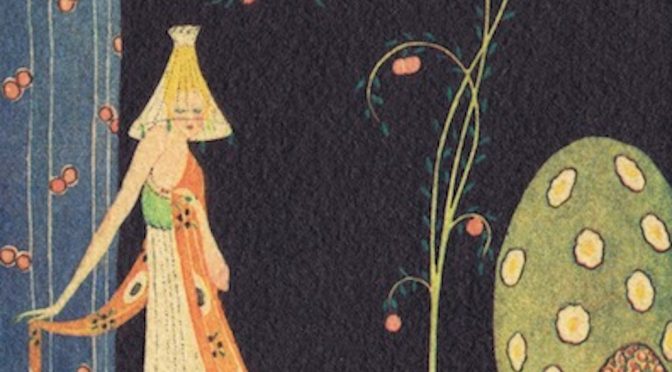
S.S. Longley
My collection of images by the Jazz Age artist S.S.Longley has expanded and I realise how much I like his expressive, art deco, Jazz Age drawings in particular.

My collection of images by the Jazz Age artist S.S.Longley has expanded and I realise how much I like his expressive, art deco, Jazz Age drawings in particular.
The Chateau de Madrid was regarded as perhaps the best and finest restaurant and summer resort of Paris in the Jazz Age. A favourite rendezvous of Americans in Paris and Parisian society, it’s allure was because you could dine and dance outdoors under the trees in the cool night air at the height of the Paris social season.
One of the leading ‘society’ couturiers in London during the 1920s was Buckmaster who created stylish and elegant ensembles for leading members of London’s high society.
In a fascinating guide-book entitled Paris With the Lid Lifted by Bruce Reynolds published in 1927, the author makes reference to what he calls ‘Fairy-Nice Boys.’
The Gaby Doll Scene
Recently Doreen Marshall sent me a photo and message on my Jazz Age Club Facebook page of a 1920s Gaby Doll and box. It certainly piqued my interest because it was a representation of a scene from the Folies Bergere in 1923 with the costume designed by Dolly Tree.
Gary is a marketing professional who has had varied experience in all aspects of marketing, event planning, PR and online digital exposure. He worked in the book publishing industry for over thirty years focused primarily on non-fiction titles and in various marketing capacities for such companies as Pan Books, Merehurst, Charles Letts, Constable & Robinson, Sutton and The History Press.

In the early 1990s he became fascinated by sugarcraft and cake decorating, invented the technique for recreating fabric out of sugar, wrote books and gave classes in the UK, South Africa, USA and New Zealand and launched the first ever mass market cake decorating magazine.

Gary also has an enduring fascination with the Jazz Age and has been an avid collector of ephemera from the inter-war years, focused largely on fashion, cabaret, silent film, music-hall, dance, theatre and costume design. He has become an expert on 1920s culture and nightlife.
In the Spring of 2010 Gary launched the Jazz Age Club website. ‘I have had a passion about the Jazz Age of the 1920s and 1930s for a long time, especially anything relating to film, stage, cabaret, fashion and art. I wanted to introduce new topics and views not explored elsewhere to bring the period alive in a more diverse way instead of just focusing on the usual suspects such as Al Capone, Fitzgerald, the Bright Young Things and fancy dress parties. Although my main focus is about art, culture and entertainment, the website is intended to become a central resource and open forum for all news, views, reviews and stories about anything relating to the period of the 20s and 30s but in reality will span 1900-1940 which can loosely be described as the Jazz Age. It will also be international in flavour covering both American and European subjects.’

In early 2011, the Jazz Age Club joined the Mary Evans Picture Library (www.maryevans.com), the UK’s leading source for historical imagery. All visual material owned by the Jazz Age Club is now being uploaded for commercial re-use via the Mary Evans Picture Library as the Jazz Age Club Collection.
In 2006 he moved from London to the Cotswolds and his biography about the Dolly Sisters, The Delectable Dollies: Icons of the Jazz Agewas published. After setting up Edditt Publishing in 2012 he has republished The Dolly Sisters and published London’s Hollywood: The Gainsborough Studio in the Silent Years, Dolly Tree: A Dream of Beauty and The Rocky Twins: Norway’s Outrageous Jazz Age Beauties. He also wrote Retro Paris for New Holland Publishers.
He is currently working on various other book projects all with a 1920s theme.


Web Platforms
http://garychapman.wordpress.com
http://fynesharteharrington.wordpress.com
On Facebook
Edditt Publishing
Gary Chapman Cakes
Jazz Age Club
On Twitter
@Edditpub
@GaryChapmanCake
@JazzAgeClub
One of the most exclusive members-only night-club in London in the mid to late 1920s was Chez Victor, owned and run by the Italian Victor Perosino. It had a glittering, but short, 4 year career becoming‘a popular haunt with the gilded youth and flapperdom’ before it was targeted by the police and closed down in early 1928. Victor moved across the Channel and with noticeable panache re-opened various other Chez Victor’s in Paris and elsewhere. But Victor’s story, and his deportation, hide a scandal that eventually became public in 1932
Renée Harris (1876-1969), professionally known as Mrs. Henry B. Harris, escaped the Titanic disaster to become Broadway’s first woman producer during the Jazz Age. One of the best-known survivors of the 1912 sinking, her life and work have never been examined until now with the publication of Broadway Dame by Randy Bigham and Gregg Jasper.
It is not often that a book like this comes along – a glowing pictorial history of one of London’s major nightclubs in the 20th century – so this is a gem. Beautifully produced and lavishly illustrated, Levy takes us through the genesis of Murray’s Cabaret Club that was situated at 16-18 Beak Street under the aegis of Percival Murray from the early 1930s through to the 1960s.
Described as the Capital of Civilisation, Rome was known as the ‘Eternal City’ because civilization had endured there for thousands of years. As a result the passion to visit Rome had never died and was felt by the modern traveller as much as it was by the citizens of the Roman Empire, the medieval pilgrim or the renaissance artist. Naturally, the attraction of Rome has always been its classical monuments and the Vatican.